
Kids lose their teeth and grow their permanent ones at different times in life. What happens if your child’s tooth does not erupt on time?
https://ift.tt/2PVTKeE
Kids lose their teeth and grow their permanent ones at different times in life. What happens if your child’s tooth does not erupt on time?
https://ift.tt/2PVTKeE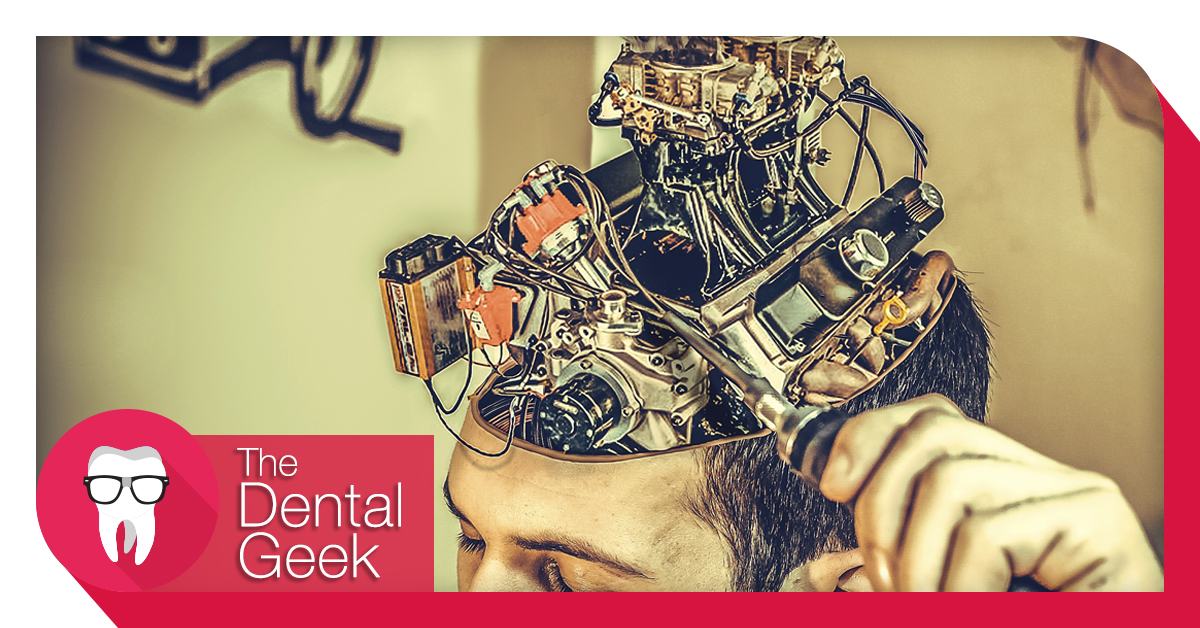
The Omnipresent Technology
Even in 2018, the mainstream perception of artificial intelligence is perhaps that of a human-like android that performs extraordinary feats of strength and intelligence at levels that far surpass that of any human. As a society, our concept of artificial intelligence is skewed by the litany of science fiction books and films we have come to endear since an early age.
In reality, we seldom consider that this ubiquitous technology is no longer the stuff of fantasy—we in fact encounter many aspects of artificial intelligence in our everyday lives and utilize them to simplify otherwise tedious tasks we have to complete. As the capabilities of artificial intelligence continue to evolve, they stand to enhance every professional field—including dentistry.
What is Artificial Intelligence?
Founded in the 1950s, artificial Intelligence, or AI, is described as any task performed by a machine or program that would have otherwise required a human thought process if carried out by one of us. Such a definition, though broad, is essentially the basis for this technology. AI systems typically display at least some of the following behaviors associated with human intelligence: reasoning, planning, learning, problem solving, perception, and even creativity and social intelligence.
AI can be classified into two broad categories—narrow AI and general AI. The latter is any system that possesses general human cognitive abilities when presented with an unfamiliar task—this “strong” AI system on its own, wields enough intelligence to find solutions. Conversely, narrow AI is a system designed to perform a specific task. Virtual assistants that we use on an everyday basis such as Apple’s Siri and Amazon’s Alexa are an example of narrow AI.
How is AI applied in dentistry?
The beauty of AI is that machines can be taught to analyze large data sets and “learn” from them to render optimal diagnoses. An example of such is reading radiographs to search for caries—a process during which even the most experienced and skilled clinician can make mistakes from time to time. In fact, it’s estimated that the human misdiagnosis rate of caries from X-rays may be higher than 20 percent. Such is not the case with AI—machines aren’t hindered by the inherent human bias and error, nor do they suffer from fatigue. As long as they’re provided with the proper data set, and correctly trained on how to recognize patterns, machines can facilitate faster, more efficient outcomes.1
In the past five years, AI has made tremendous strides toward becoming a viable source of help in any dental practice. Cloud-based computing has provided easier access to the big data sets necessary to train AI to perform at its highest level. All of that data require an extensive amount of storage, which in recent years has become cheaper and faster in terms of data retrieval.
The most advanced AI technique, “deep learning”, stands to have a profound impact on the future of dentistry. Deep learning is patterned off the human brain, using the same layered networks that we were born with to create its own rules while improving and evolving its analytical capacity when presented with larger data sets. Currently, dentists have access to a deep learning machine that’s nearing the final stages of clinical evaluation. Dentistry.AI implements a deep and flexible thought process to detect caries and can be investigated and tested by any licensed dentist. Active development on Dentistry.AI began two years ago, and software engineers learned that while teaching clinical dentistry to a machine is far from easy, its benefits are significant.
A recent study tested how a team of practicing clinicians would fare against Dentistry.AI in evaluating 500 bitewings.1 Results showed that although the dentists won out in terms of precision, the machine outperformed the humans in gauging “sensitivity”, which measures the proportion of correctly predicted caries present against the actual number. While this battle of man vs machine more or less ended in a draw, as AI continues to evolve, expect the next few years to bring commercially available and reliable detection tools that will not only be able to detect caries, but also bone loss and periodontal disease.
Looking Ahead to the Future
As technology continues to invariably advance, the dental community stands on the precipice of an AI revolution that will forever change the way dentistry is performed—from both a clinical and practice management perspective. Already, several practice management products have been introduced which incorporate AI, including a digital assistant that uses natural-language processing to replace the traditional point-and-click interfaces, and a learning-based schedule optimizer.
Moreover, as was previously examined, deep learning AI techniques will begin to increasingly impact clinical dentistry. These tools are able to spot abnormalities in images that even seasoned clinicians might overlook, while executing its findings in real time to seamlessly integrate into any practice workflow. As deep learning systems continue to grow in intelligence, the tools will augment diagnostic accuracy and treatment
planning—providing early detection of caries, periodontal disease, and even oral cancer.
Fear not—AI will never fully replace the human dentist by making you obsolete. On the contrary, this rise of the machines will enable you perform at a higher level in every aspect of your profession while essentially making your job much easier. The future of dentistry is very bright with artificial intelligence, and in the next 10-15 years you can expect these tools to become commonplace in taking our field to the next level.

One in two people living with diabetes do not know that they have the disease. Could you prevent diabetes in your family? Can you spot the warning signs?
https://ift.tt/2Qs7n2k
It’s our favorite time of year again: welcome to the Twelve Days of Burgmas! Last year, we posted twelve different blogs about twelve different awesome holiday topics. It was great to learn awesome things like how children celebrate the holidays around the world, how a Christmas elf might become a dentist, and even myths or truths about Santa!

This year, we are going to host another great contest that we welcome all of our current and future patients to enter. We will be celebrating the twelve days leading up to Christmas by asking our patients to post a picture of their awesome little superhero(es) in one of our offices during their visit. Check out the rules below, and make sure you get your visit in during the month of December because you do not want to miss out on these amazing prizes!
Contest Rules**Disclaimer**
All rules must be followed in order to count as an entry. We will not be considering anyone who hasn’t followed every single rule.
You will also need to make sure Burg Children’s Dentistry can message you on Instagram. We will be announcing the daily winners on our Instagram page, but we will also be sending them private messages also on Instagram. You will need to set your account to public so we can see your post. You must also check your messages during the twelve days to see if you’ve won. We don’t want to miss any winners due to a misunderstanding!
Schedule Your Appointment Now!
If you have any questions about our contest, our services, or anything else, please do not hesitate to call any of our locations. We look forward to our yearly Twelve Days of Burgmas this holiday season, so don’t miss out! See you soon!
https://ift.tt/2D5VQ4MThe post Dental Coding: What You Need to Know to Keep Your Practice Compliant appeared first on ACT Dental.
https://ift.tt/2qoBSuz